Summer 2002: Drought and the Coal Seam Fire
· Escape Garden Design, Aspen, Colorado
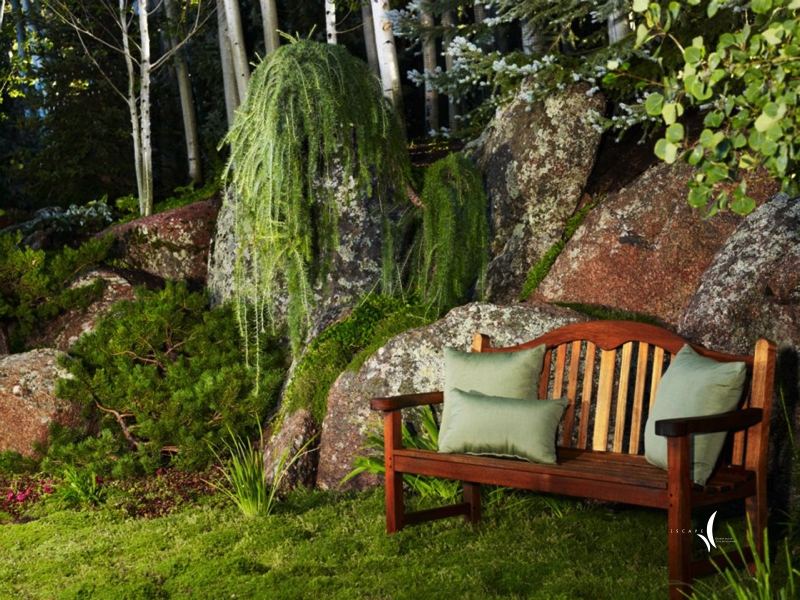
Summer is the loud season, all bloom and bees and moving water, before the first cool nights start the turn.
Water is the constant concern. The features run on a closed loop, recirculating the same water, and the planting is grouped so the irrigation only runs where it is needed. In a dry climate, a beautiful garden and a frugal one are usually the same garden.
The perennial beds peak in July, and steady deadheading pushes a second flush of color into the cooler nights of late August. The native grasses come into their own as the season ages.
The afternoon monsoon storms arrive most days from mid July, brief and loud, and a smart garden leans on them, pulling back the irrigation after a real soaking instead of running the timer.
This was the driest year in Colorado's recorded history, and Denver brought in mandatory water limits for the first time in two decades. In June the Coal Seam Fire burned into West Glenwood, close enough that the whole valley felt it. Water-wise design stopped being a preference and became the only responsible way to build.
On the practical side this season, a note from the field. For a long wash of blue-purple that bees adore and deer ignore, catmint and Russian sage are two plants we use constantly. Catmint blooms early, and if you shear it back by a third after the first flush it blooms again into fall. Russian sage comes on in mid to late summer, tall and airy, and it takes the hottest, driest spot you have.
Water early in the morning, before the midday sun and wind carry half of it off, and let the monsoon do the rest when it shows up.
We design, build, and maintain our own gardens, so we live with the results for years and learn from them.
The land around us is the best teacher there is, and the gardens we like best borrow from the hillsides more than from any catalog.
Everything in this valley runs on the same short calendar, and the gardens that thrive are the ones designed around it rather than against it.
Our soil is mostly alkaline clay, the air is thin and dry, and the sun is strong, so the plants that last are the ones that have made peace with all three.
We take on only a handful of gardens each year, which is the only way to give a place like this the attention it asks for.
More than anything, a garden up here rewards patience: it takes a season or two longer to settle than people expect, then looks like it was always there.
More when the season changes. As ever, ask if you want a hand with your own piece of the valley.