October 2017: Garden Paths
· Escape Garden Design, Aspen, Colorado
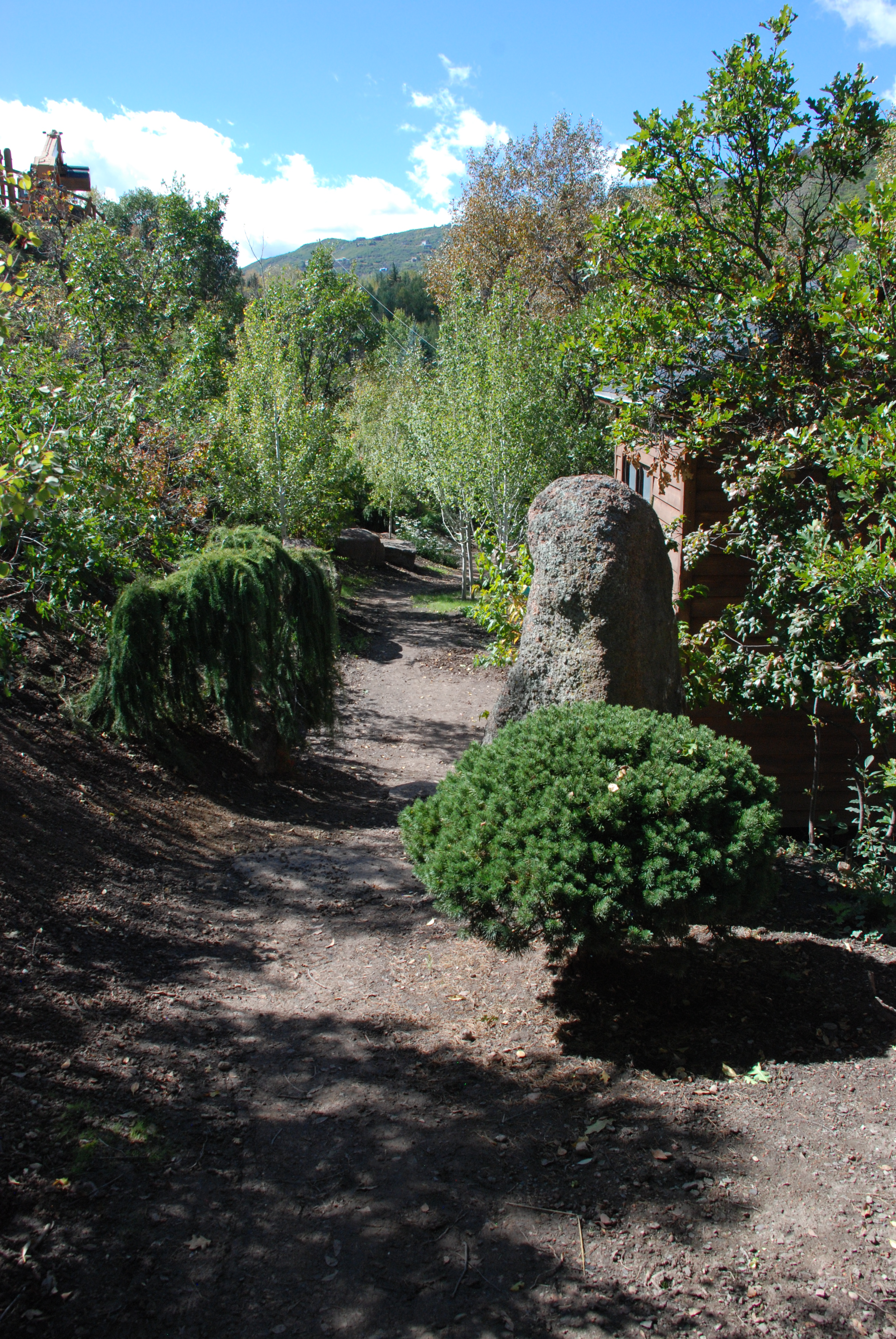
A garden path can take you 'round the corner to a surprise. A garden path can take you to your canine's loving eyes. A garden path can lead you home from a long day, slowing your pace until your shoulders drop and your breath returns.
What does a garden path actually do?
Paths are the punctuation of a garden. They set the pace: where you pause, where you linger, where you turn your head. The best paths reveal the garden gradually, never all at once.
Which materials work best for mountain garden paths?
Material matters. Local stone, settled into the earth, feels as though it has always been there. Crushed granite has a quiet crunch that signals you have left the indoors behind. Stepping stones surrounded by creeping thyme release fragrance with every step. In the Aspen area we favor stone that matches the local geology, so the path reads as part of the mountainside rather than an import.
How wide should a garden path be?
Width is a quiet language. A path wide enough for two people walking side by side, about five feet, invites conversation. A path that narrows to single file, two feet or so, invites contemplation. Both have their place in a well-considered garden.
The path that is not quite a path
And then there is the path that is not quite a path: the mowed line through a meadow, the gap between two boulders, the worn track where deer have always walked. Paths of suggestion, and sometimes they are the best of all.
Common questions
What is the best stone for garden paths in the Colorado mountains?
Local stone set directly into the soil weathers best and looks most at home. Around Aspen we often use sandstone and granite that match the surrounding geology, with joints planted or left to gather moss.
How wide should a garden path be?
About five feet lets two people walk side by side and suits main routes. Secondary paths can narrow to two or three feet for a slower, single-file walk. Varying the width is one of the simplest ways to change how a garden feels.
Does creeping thyme survive between stepping stones at high altitude?
Yes. Creeping thyme is hardy in the Roaring Fork Valley, takes light foot traffic, and releases its scent when stepped on. Give it sun and sharp drainage and it will knit the stones together within a few seasons.