Summer 2006: Beetle Kill on the Passes
· Escape Garden Design, Aspen, Colorado
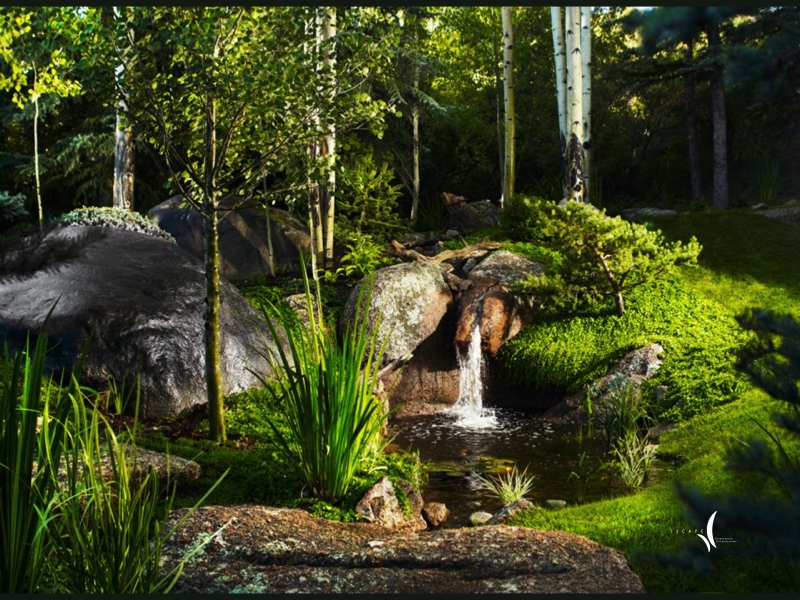
By midsummer the valley is at its peak, the perennials full, the water features earning their keep through the heat.
Water is the constant concern. The features run on a closed loop, recirculating the same water, and the planting is grouped so the irrigation only runs where it is needed. In a dry climate, a beautiful garden and a frugal one are usually the same garden.
The perennial beds peak in July, and steady deadheading pushes a second flush of color into the cooler nights of late August. The native grasses come into their own as the season ages.
The afternoon monsoon storms arrive most days from mid July, brief and loud, and a smart garden leans on them, pulling back the irrigation after a real soaking instead of running the timer.
The rust-red stands of beetle-killed pine were impossible to miss on the drive over the passes by now, a slow disaster reshaping the forests around us and a reminder never to lean a whole landscape on a single species.
On the practical side this season, a note from the field. A mountain landscape reads in layers, and the gardens that feel right borrow that structure rather than lining plants up like soldiers. We start with the backbone: boulders and evergreens that hold the composition all year. Then a middle layer of shrubs and grasses for body, and finally perennials and groundcovers for color and motion.
Water early in the morning, before the midday sun and wind carry half of it off, and let the monsoon do the rest when it shows up.
We take on only a handful of gardens each year, which is the only way to give a place like this the attention it asks for.
More than anything, a garden up here rewards patience: it takes a season or two longer to settle than people expect, then looks like it was always there.
We design, build, and maintain our own gardens, so we live with the results for years and learn from them.
The land around us is the best teacher there is, and the gardens we like best borrow from the hillsides more than from any catalog.
Everything in this valley runs on the same short calendar, and the gardens that thrive are the ones designed around it rather than against it.
Our soil is mostly alkaline clay, the air is thin and dry, and the sun is strong, so the plants that last are the ones that have made peace with all three.
We will see you next season.